
Home / Conditions / Ear & hearing
Ear & hearing
Hearing loss in adults
Adequate hearing is essential to maintain a connection with the outside world. In general terms there are 2 main components to our hearing, the conductive component and the sensori-neural (nerve) component.
Clinical content by the surgeons of Sydney ENT Clinic · Updated October 2026
Both of these components can be affected by inherited and acquired conditions. This can range from simple mechanical problems such as wax impaction in the ear canal and fluid behind the ear drum, to molecular changes affecting cochlear hair cells and tumours compressing the nerve of hearing.
Any degree of hearing loss requires careful measurement and assessment. As there is a wide range of possible pathologies there is a wide range of treatments that may be required.
Common Causes
Presbycusis (age related hearing loss) is the most common form of hearing loss. It is the predominant neurodegenerative disease of ageing. It is generally slowly progressive, symmetric and irreversible, and in some has a genetic predisposition. It classically affects the higher frequencies and in early cases causes hearing difficulties especially in the presence of background noise.
Noise induced hearing loss is the commonest preventable form of sensorineural hearing loss. Prolonged exposure to noise creates damage to cochlear hair cells, microscopic components of the inner ear that are responsible for converting sound waves into an electric neural signal that is perceived as sound. When exposed to loud noise the ear can react by creating a sensation of tinnitus or ringing in the ear. Initially this is self resolving and is termed a temporary threshold shift. Repeated and extended exposure to loud noise can then lead to permanent damage. As a general guideline permanent damage can occur after exposure to noise at 85dB after 8 hours. For every 3dB rise in noise input, the ear can last half that time. So at 88dB, 4 hours is the maximum exposure. 91dB 2 hours, 94dB 1 hour, 97dB 30 minutes, 100dB 15minutes and so on. As a guide to the level of environmental noise, a chainsaw runs at 100dB. The level of noise within a nightclub however also runs around the 100dB level.
Sensorineural (nerve) hearing loss
Sensorineural hearing loss arises in the cochlea (the inner ear) or the hearing nerve. Besides age and noise, causes include genetic forms, ototoxic medicines (some chemotherapy drugs and antibiotics), viral infections, head injury, Ménière’s disease, autoimmune inner ear disease and, rarely, a benign tumour of the hearing nerve (vestibular schwannoma). Most sensorineural loss is permanent, but it is very effectively rehabilitated. One form is an emergency: a sudden drop in hearing in one ear can often be recovered if treatment starts within days.
Conductive hearing loss
Conductive hearing loss is a mechanical problem in the ear canal, ear drum or the three hearing bones, so that sound does not reach a healthy inner ear. Common causes are wax impaction, fluid behind the ear drum, ear canal infection, a perforated ear drum, otosclerosis (stiffening of the stapes bone), cholesteatoma and surfer’s ear. Many conductive losses can be treated — by removing the cause, repairing the ear drum or reconstructing the hearing bones — which is why every conductive hearing loss should be reviewed by an ENT surgeon. Mixed hearing loss, with both components, is common.
Hearing rehabilitation: hearing aids
For most people with sensorineural hearing loss the first and best treatment is a well-fitted hearing aid. Modern aids are small digital devices that are programmed to your hearing test and adjusted over the first weeks. The main styles are behind-the-ear and receiver-in-canal aids (the most versatile, suitable for mild to profound loss), in-the-ear and in-the-canal aids (less visible, better for mild to moderate loss), and CROS/BiCROS systems for single-sided deafness, which route sound from the deaf side to the hearing ear. Most now connect to phones and televisions by Bluetooth and have rechargeable batteries. The fitting matters as much as the device: at Kogarah hearing tests and fitting are done by the clinical audiologists of Precision Hearing in our suite, working with the surgeons. Eligible pensioners and veterans can access aids through the Australian Government Hearing Services Program.
When hearing aids are not enough: hearing implants
When a sensorineural hearing loss has progressed beyond what hearing aids can usefully amplify, a cochlear implant stimulates the hearing nerve directly and is now a well-established treatment for adults with progressive hearing loss. For conductive or mixed losses that cannot be corrected surgically, and for single-sided deafness, the bone-anchored and middle-ear implants described below bypass the damaged part of the ear. Implant candidacy is assessed at Kogarah by Dr Greg Shein with Precision Hearing.
Bone anchored and implantable hearing aids
Indications:
- Conductive hearing loss -not amenable to surgical correction, or where there is a contra-indication to hearing aids: usually previous surgery or severe external canal disease
- Single sided nerve deafness. This is often following a severe infection, trauma, or the removal of a tumour of the hearing nerve. The principle relies on transfering the sound from the bad ear to the good ear creating the illusion of hearing again from both ears. Other options here include a BiCross hearing aid or a cochlear implant.
- Importantly it is essential to run a trial of the BAHA, prior to proceeding to surgery. This is performed by using a soft headband to hold the hearing aid in position. Whilst not giving as efficient a result as the final result it does provide a good idea as to the expected benefits.
Advances:
A number of recent developments have significantly improved the results of bone anchored hearing aids. This includes the implantable devices as well as the external processors. Lower profile, magnetic options and wireless integration are all upgraded features.
Bone Anchored Hearing Aid:
Cochlear BAHA
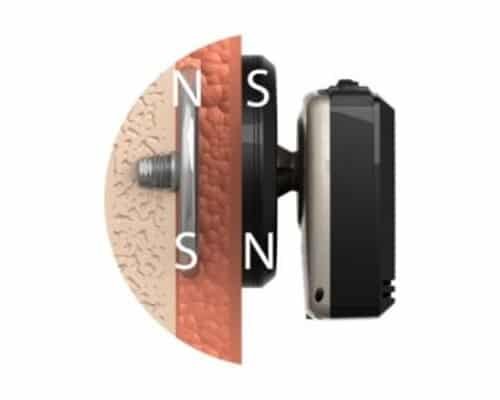
- The implant only extends 3 or 4 mm into the temporal bone – relying on osseointegration for connection between live bone and the titanium. This is then either attached to a magnet (attract) or and abutment (connect)
- Surgery is low risk, reversible and relatively simple
- MRI safe
The cochlear BAHA 5 system allows a wide fitting range with connection options and processor options.
The 3 processors are the BAHA 5 (up to 45dB), BAHA 5 Power (up to 55dB) , and the BAHA 5 Super power (up to 65dB). This allows a much wider fitting range for appropriate patients.
The processor can then be attached either via a transcutaneous magnet, or an abutment. The obvious advantage of a magnetic attachment is the lack of an abutment that passes through the skin that has a small risk of causing skin irritation. The advantage of the abutment is that it provides the most efficient transfer of sound.
BAHA attract, which allows the placement of a subcutaneous magnet, that avoids the need for a trans-cutaneous abutment.
For further information: Cochlear BAHA.
Bone Anchored Hearing Aid:
Medel Bonebridge
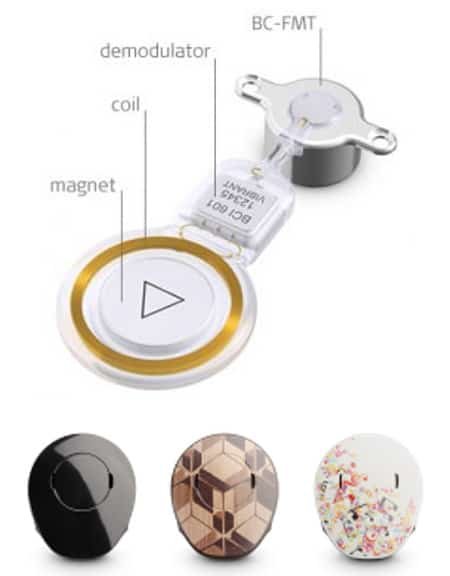
Image above shows the internal component and external processor.
This implant is placed completely subcutaneously, requiring approximately 4mm of bone to secure the implant. Once implanted the internal device connects to the external component magnetically in the same way that a cochlear implant does. The external processor, the Samba, is very low profile and this also minimises feedback.
The other feature of this device is that it is an active implant. This means that the microphones of the external device picks up a sound wave and converts this into an electrical signal. This is transferred to the internal component which then converts this into a vibration. The limit of sensorineural hearing loss is 45-50dB.
Implantable Hearing Aid:
Vibrant Soundbridge (Medel)
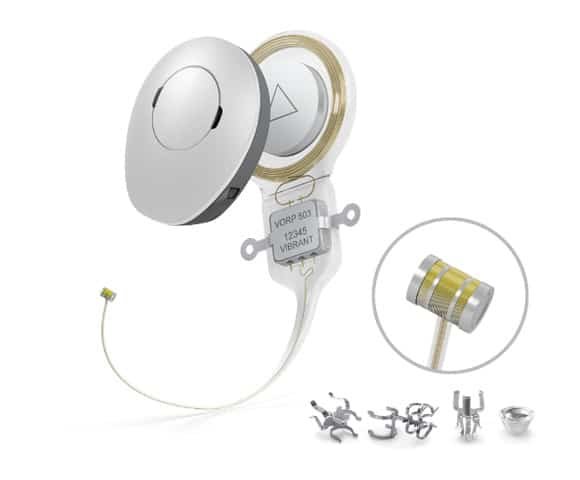
The Vibrant soundbridge is a middle ear implant system that is a great option for hearing rehabilitation in patients with a significant conductive hearing loss not amenable to standard hearing aids. The audiologic advantage over a BAHA or a Bonebridge is that the unilateral cochlear is stimulated maximising the advantages of directionality. The active part of the implant is connected to residual ossicles or even to the round window.
For further information: Vibrant Soundbridge.
Please do not hesitate to contact us if you have any questions or would like to make an appointment. If you are a candidate we will discuss in more details and arrange a trial as appropriate.
Tested at Kogarah on the day
Hearing tests with Precision Hearing are available in Suite 5 at the time of your appointment, and CT or MRI of the ear can be arranged at Lumus or Castlereagh Imaging within a few hundred metres of the clinic.
Frequently asked questions
When should I see an ENT specialist rather than an audiologist about hearing loss?
Three situations should always be reviewed by an ENT surgeon: any asymmetric hearing loss — one ear worse than the other, however small the difference — because the surgeon’s job is to rule out an underlying cause such as a benign growth on the hearing and balance nerve; any conductive hearing loss (a problem of the ear canal, ear drum or hearing bones), much of which is treatable; and hearing loss with other symptoms such as vertigo, imbalance, pain or pressure in the ear. A symmetrical, age-related nerve hearing loss can be managed by a good clinical audiologist, who will work through the options with you and refer on if anything about the test concerns them. One note on who you see: audiometrists and audiologists are not the same. A clinical audiologist is university-trained and will recognise when a hearing test is pointing to a medical problem; a hearing-aid retailer may employ audiometrists whose role is largely to fit aids. If you are unsure whether a hearing test or a hearing-aid recommendation is right, an ENT review is the way to settle it.
Can hearing loss be reversed?
Sometimes. Many conductive hearing losses can be corrected surgically — repairing a perforated ear drum, treating otosclerosis, clearing cholesteatoma or reconstructing the hearing bones. Most nerve (sensorineural) hearing loss is not reversible, but it can be rehabilitated very effectively with hearing aids or, when aids are no longer enough, implants. The important exception is a sudden drop in hearing: this is an emergency, and nerve hearing lost suddenly can often be recovered if treatment is started within days.
Is hearing loss in one ear only something to worry about?
It needs to be assessed properly, yes. Hearing loss in one ear, or that is clearly worse on one side, should be investigated by an ENT specialist regardless of how mild it is. Most of the time no serious cause is found, but one-sided loss is the typical presentation of conditions that must not be missed — including a vestibular schwannoma (acoustic neuroma), a benign tumour of the hearing and balance nerve — and these are easily excluded with examination, a hearing test and, where indicated, an MRI.
Is there a link between hearing loss and dementia?
Yes — there is a well-established association between untreated hearing loss and cognitive decline. The mechanism appears to be largely social: as hearing declines, people withdraw from conversation and from the activities that keep the brain engaged, and isolation and low mood follow. Loss of any sense — vision, hearing, smell — has a similar effect. Treating hearing loss does not reverse dementia, but the evidence suggests that proper rehabilitation, keeping people in conversation and in company, helps to limit the decline.
What are the options if hearing aids are not enough?
There are real options, and persisting with ineffective hearing aids is not one of them. If part of the loss is conductive, surgery may correct it. For nerve hearing loss that has progressed beyond what hearing aids can help, cochlear implantation is now a well-established treatment — adults with progressive hearing loss who have outgrown their hearing aids are the group who do best with it. A bone conduction implant is an option for some conductive and single-sided losses. Dr Greg Shein assesses implant candidacy at Kogarah with the audiologists of Precision Hearing.
Who treats this at Kogarah
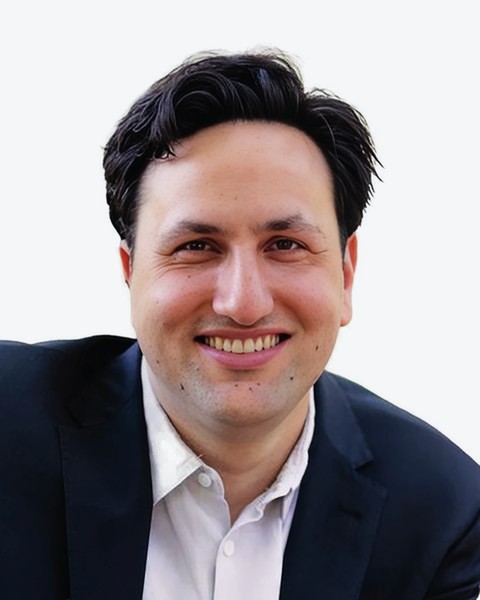
Complex otology, cochlear implantation and lateral skull base: Dr Sean Flanagan, Darlinghurst.
For GPs
Send the referral directly to the specialist’s rooms. If the right surgeon isn’t obvious, send it to any of us and we will place it.
Referral information