
Home / Conditions / Ear & hearing
Ear & hearing
Perforated ear drum (tympanic membrane perforation)
The tympanic membrane (ear drum) provides protection to the middle ear structures, and is part of the amplification system of the ear.
Clinical content by the surgeons of Sydney ENT Clinic · Updated October 2026
Therefore a hole in this membrane increases the risk of infections as well as to cause degrees of hearing loss.
A perforation can be the result of trauma, or of acute and chronic infections. The initial assessment requires microscopic examination, a formal hearing test, and often a CT scan of the ear, to exclude more serious conditions. In general terms surgical closure of the hole is recommended, with the size and chronicity important factors dictating the complexity of the repair. Occasionally if the degree of hearing loss is only mild, and the ear is able to be kept completely dry, observation is recommended.
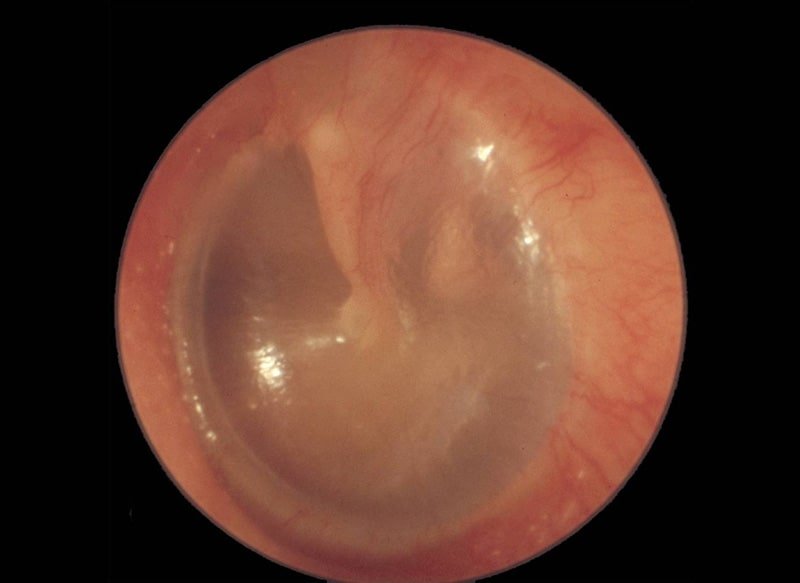
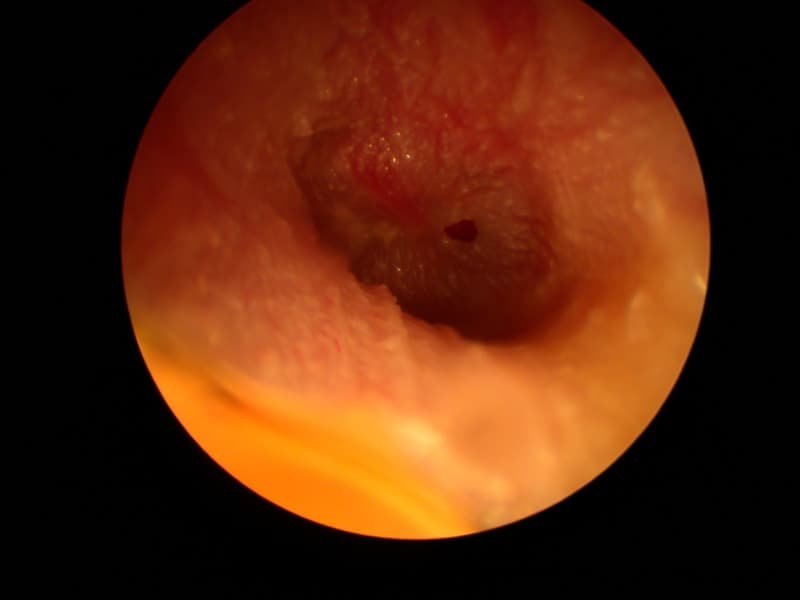
Small perforation in the tympanic membrane. There is evidence of co-existing infection. This perforation occurred following a fall from a surfboard onto the water. Similar injuries can occur after a blow the external ear due to a pressure wave created down the ear canal. If the infection can be cleared, most of these perforations heal spontaneously.
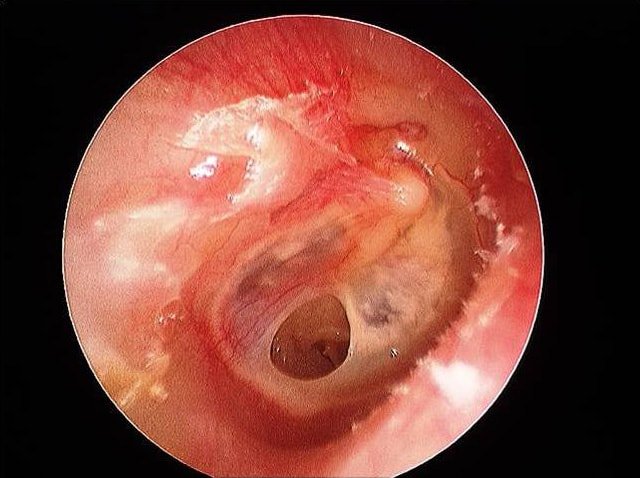
A small tympanic membrane perforation. This is of long standing, thus with no chance of spontaneous closure. In general terms, the larger the perforation the worse the hearing.
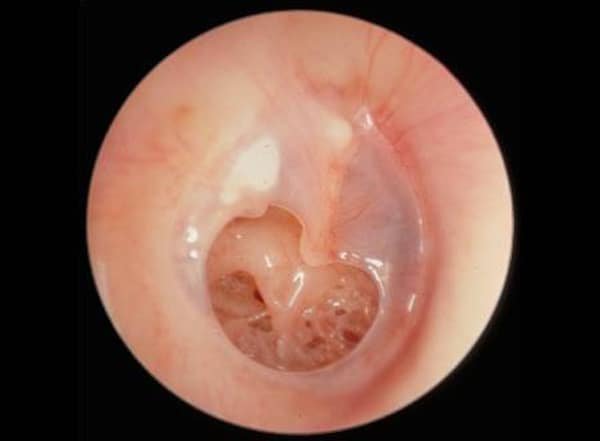
A larger perforation of the ear drum. Currently there is no infection, but is associated with a significant conductive hearing loss.
Tested at Kogarah on the day
Hearing tests with Precision Hearing are available in Suite 5 at the time of your appointment, and CT or MRI of the ear can be arranged at Lumus or Castlereagh Imaging within a few hundred metres of the clinic.
Frequently asked questions
Will a perforated eardrum heal on its own?
In a high percentage of cases, yes — particularly a fresh perforation from a middle ear infection or an injury. The ear needs to be kept religiously dry and free of infection while it heals, to give it the best chance of closing by itself. If the hole is still there after three months it is unlikely to close on its own, and repair is then considered.
Can I swim or shower with a perforated eardrum?
Yes, with precautions. Water in the ear canal from an ordinary shower carries little risk, but shampoo and soapy water running into an open middle ear, or diving and swimming underwater, carry a much higher risk of infection. Use water protection — cotton wool coated in Vaseline for showering, or properly fitted ear plugs or custom moulds for swimming — and keep the ear dry if it is discharging.
When does a perforated eardrum need surgery?
In general we recommend closing a perforation that has not healed, but not every perforation has to be repaired. A dry, clean hole that is causing little trouble can be safely observed, particularly in older patients, provided it is checked for complications. Repair is advised when the ear keeps getting wet and infected, when there is debris or cholesteatoma behind the drum, or when the hearing loss matters: the larger the hole, the larger the conductive hearing loss, and a perforation also makes wearing a hearing aid difficult.
How successful is eardrum repair (myringoplasty / tympanoplasty)?
For a clean, dry perforation following a single infection or an injury, repair is highly successful — complete closure in around 95 per cent of cases or more. The outlook is less certain when the perforation is part of chronic ear disease: Eustachian tube dysfunction, significant nasal and sinus disease, or cholesteatoma. These need to be managed at the same time, and the success of the repair then depends on how well those underlying problems are controlled.
Will my hearing improve after the repair?
In general, yes. Closing the hole restores the ear drum’s ability to collect and transmit sound, and the bigger the perforation, the more hearing there is to gain. If the hearing bones are also damaged they can be reconstructed at the same operation; any sensorineural (nerve) component of the hearing loss is not changed by the repair.
Who treats this at Kogarah



Complex otology, cochlear implantation and lateral skull base: Dr Sean Flanagan, Darlinghurst.
For GPs
Send the referral directly to the specialist’s rooms. If the right surgeon isn’t obvious, send it to any of us and we will place it.
Referral information