
Home / Conditions / Ear & hearing
Ear & hearing
Ear pain when flying (barotrauma)
Flying with Eustachian tube dysfunction carries the risk of middle ear damage, and in rarer cases severe inner ear damage.
Clinical content by the surgeons of Sydney ENT Clinic · Updated October 2026
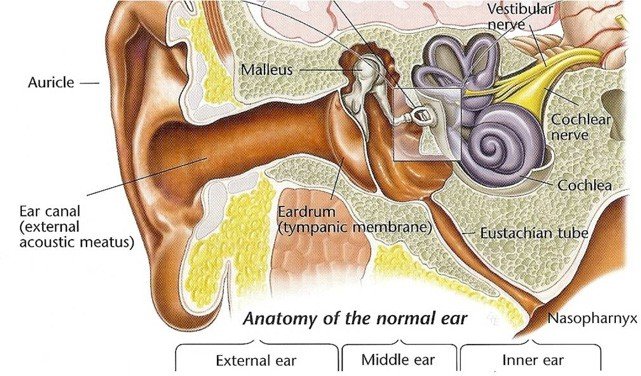
The Eustachian tube provides a connection from the back of the nose to the ear and allows equalisation of pressure changes. Normally gentle swallowing, yawning or popping the ears allows this tube to open and the ear is protected. When the tube is not functioning properly equalisation does not occur and a degree of discomfort felt. The commonest exacerbating factor is a simple cold where the nose becomes congested. Some people have long standing problems with their Eustachian tubes and can have problems without any other exacerbating events.
The following are simple manoeuvres that in a vast majority of cases prevent problems when flying.
Auto-inflation Exercises
Chewing and swallowing on ascent and descent. Often the use of sugar free chewing gum can help. Gently popping the ears by blowing out through a blocked nose, or puffing out the cheeks. The use of an otovent device can help in those too young to achieve this themselves.
Nasal Decongestant Sprays

To apply 2-3 sprays into each nostril both 30 minutes before ascent and descent. Brands include Drixene, Logicin, Otrivin.
Saline Sprays
Pretreating the nose with saline sprays or rinses for a few days before a flight can help clear thickened mucous from the nose. During extended flights they are helpful to moisturise the nose due to the drying effect of on board air-conditioning.
Intranasal Steroid Sprays
We may also prescribe a spray to be used in the days or weeks before an upcoming flight especially in cases where there are significant allergy or chronic infections.
Pressure Regulating Ear Plugs

Plugs designed to help the ear equalise. To be worn on ascent and descent. A common brand is ‘Ear Planes’, available both for adults and children.
Extreme Cases
In extreme cases, especially in people who continue to have problems despite the above precautions a perforation in the ear drum can be made often with the insertion of a tube to bypass the faulty Eustachian tube.
Information sheet: Protecting your ears when flying
Dr Sean Flanagan’s two-page guide to flying with Eustachian tube problems — saline, decongestant and steroid sprays, pressure-regulating ear plugs, auto-inflation exercises, oral medications, and what can be done when the precautions are not enough.
Tested at Kogarah on the day
Hearing tests with Precision Hearing are available in Suite 5 at the time of your appointment, and CT or MRI of the ear can be arranged at Lumus or Castlereagh Imaging within a few hundred metres of the clinic.
Frequently asked questions
Why do my ears hurt when the plane descends?
Because of Eustachian tube dysfunction — the tube that connects the back of the nose to the middle ear is not opening to equalise pressure. On descent the cabin pressure rises, the air trapped in the middle ear shrinks in volume and a strong negative pressure develops, pulling on the ear drum and the inner ear. If the tube cannot open to let air in, this causes severe pain and, in rarer cases, bleeding into the ear, a middle ear effusion (fluid behind the drum), a ruptured ear drum or, in severe cases, permanent inner ear damage with hearing loss or dizziness. Ascent is rarely a problem: as the air in the middle ear expands it is simply forced out through the tube, even when the tube is sluggish — it is the descent that does the damage.
Can I fly with a cold or sinus infection?
Anyone who flies with a cold or sinus infection is at some risk of this problem, because the nose and Eustachian tube are swollen and work less well. If you cannot postpone the flight, the precautions in our information sheet (below) reduce the risk: saline sprays or rinses for a few days beforehand and during the flight; a decongestant spray (oxymetazoline — Drixine, Logicin or Otrivin) two to three sprays in each nostril about 30 minutes before take-off and again before descent; pressure-regulating ear plugs such as EarPlanes worn for ascent and descent; chewing, swallowing and gently ‘popping’ the ears (or an Otovent device) on the way down; and, under medical supervision, pseudoephedrine 120 mg 30 minutes before the flight or a short course of prednisone in the day or two beforehand. If you have significant allergy or chronic sinus disease we may prescribe a steroid nasal spray to use in the weeks leading up to the flight.
Is it safe for my child to fly with an ear infection or glue ear?
The advice for an acute middle ear infection is the same as for a cold: postpone if you can, and otherwise use the precautions in our information sheet. Glue ear is different and often surprises parents: when the middle ear is completely filled with fluid there is no air to change volume, so flying with established glue ear is usually not painful. The problem arises when the glue is resolving, or there is only a partial collection of fluid with air alongside it — that is when barotrauma can occur. Children with grommets in place can fly without any concern; the grommet equalises the pressure, and this is one of the reasons grommets are sometimes recommended for people who fly frequently.
What can I do if my ear is still blocked days after a flight?
Continue the nasal treatments — saline and a steroid or decongestant spray — and keep trying to gently pop the ears. If the ear is still blocked, muffled or painful after a few days, or if you have hearing loss, ringing or dizziness, see your GP or an ENT specialist: fluid behind the drum, a perforation or inner ear injury need to be looked for, and treatment is more effective when started early. For people who have repeated problems with flying despite all the precautions, options include a temporary controlled opening of the ear drum before a flight, a grommet, or balloon dilatation of the Eustachian tube.
Who treats this at Kogarah



Complex otology, cochlear implantation and lateral skull base: Dr Sean Flanagan, Darlinghurst.
For GPs
Send the referral directly to the specialist’s rooms. If the right surgeon isn’t obvious, send it to any of us and we will place it.
Referral information