
Home / Conditions / Ear & hearing
Ear & hearing
Ear infections and swimmer’s ear (otitis externa)
In general terms otitis externa (commonly called swimmers ear) is an inflammation of the skin of the auditory canal.
Clinical content by the surgeons of Sydney ENT Clinic · Updated October 2026
This is usually a primary infection, but can occur as the result of
Classic features of Otitis Externa:
- Significant pain with tenderness on manipulation of the pinna
- Swelling of the canal and hearing loss
- Non-mucoid discharge
- Usually an history of water exposure and/or trauma to the skin of the ear canal.
Commonest organisms:
- Pseudomonas aueroginosa
- Staphylococcus aureus
- Gram negative rods such as Klebsiella and E.Coli
- Fungi are responsible for approximately 10% of cases with Aspergillus species the most prominent.
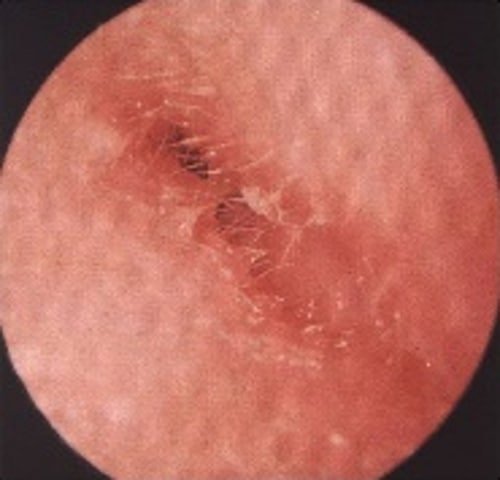
Note the severe swelling causing occlusion of the external auditory canal, with only a minimal degree of discharge seen.
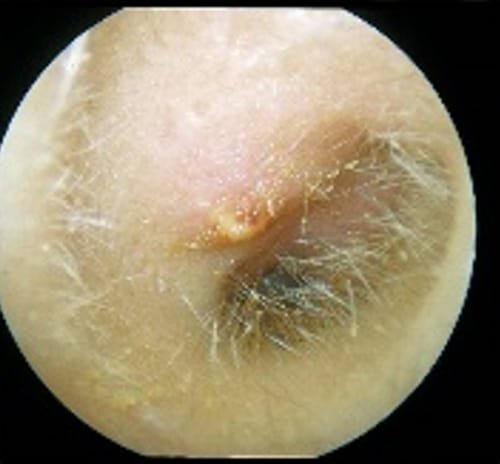
Note the localised abscess formation. Whilst most OE is generalised less commonly a furuncle can form in association with a hair follicle.
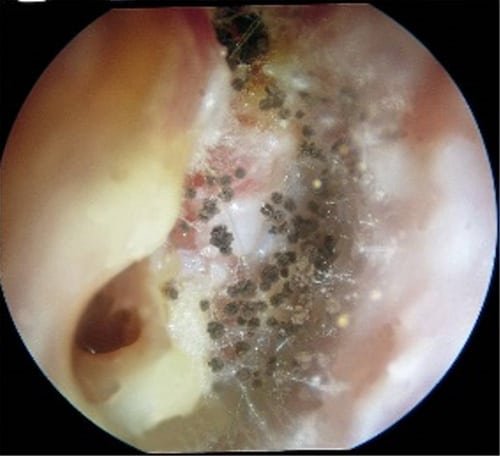
Tested at Kogarah on the day
Hearing tests with Precision Hearing are available in Suite 5 at the time of your appointment, and CT or MRI of the ear can be arranged at Lumus or Castlereagh Imaging within a few hundred metres of the clinic.
Frequently asked questions
How do I stop getting swimmer’s ear?
Several things together: keep contaminated water out of the ear canal (ear plugs for swimming, a swim cap, drying the ears afterwards and using an alcohol-based drying agent such as Aqua Ear if your ear drum is intact); treat any underlying skin condition of the ear canal such as eczema or dermatitis; avoid cotton buds and scratching; and have the ear examined to rule out a more serious underlying problem. Regular ear care and maintenance makes a real difference for people who get repeated infections.
Can I swim with an ear infection?
The general advice is to avoid swimming while the infection is active, and to wait until it has cleared — usually two to three weeks. In selected cases, such as competitive swimmers, swimming can continue with appropriate ear protection under the guidance of your surgeon.
Why does my ear infection keep coming back?
The question is whether there is an underlying problem with the ear: a skin condition of the ear canal, a perforation of the ear drum, an underlying cholesteatoma, exostoses (surfer’s ear) or an anatomical narrowing that traps water. Each of these needs to be looked for with a proper examination, because treating the infection alone will not stop it returning.
When should an outer ear infection be seen by a specialist?
Recurrent infections should always be reviewed. In an acute infection, the ear canal sometimes becomes so swollen that drops cannot reach the infected skin — this needs an ENT examination under the microscope, cleaning of the canal, and placement of a wick or specific drops or ointment so treatment can get in. Most outer ear infections (usually Staphylococcus or Pseudomonas) settle with the right topical treatment; if the infection spreads beyond the canal, oral antibiotics are added. Severe cellulitis, severe pain, or infection in someone who is diabetic or immunocompromised can become a serious, even life-threatening problem (infection spreading into the bone of the ear and skull base) and may need hospital admission for intravenous antibiotics.
Who treats this at Kogarah



Complex otology, cochlear implantation and lateral skull base: Dr Sean Flanagan, Darlinghurst.
For GPs
Send the referral directly to the specialist’s rooms. If the right surgeon isn’t obvious, send it to any of us and we will place it.
Referral information