
Home / Conditions / Ear & hearing
Ear & hearing
Cochlear implants and hearing implants
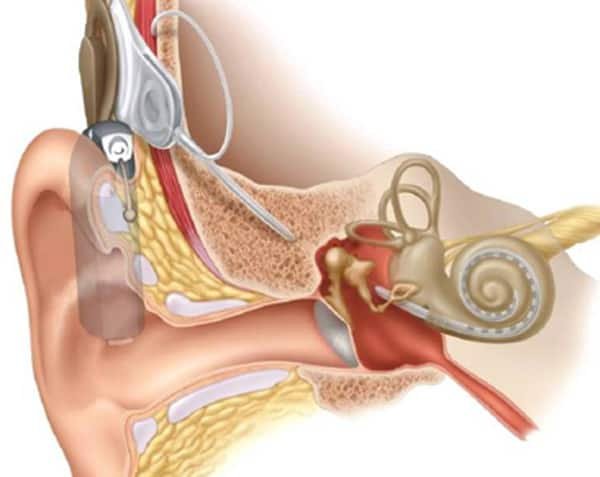
A cochlear implant is a device where an electrode is placed into the inner ear, traditionally used to manage bilateral severe sensori-neural hearing loss.
Clinical content by the surgeons of Sydney ENT Clinic · Updated October 2026
A sound processor (visually like a standard behind the ear hearing aid) is then worn and communicates to the implant via a magnetic connection.
They have revolutionised the management of severe hearing loss not only in children but for millions of adults.
The procedure itself is now routine surgery, which is low risk and involves an overnight stay in hospital.
Tested at Kogarah on the day
Hearing tests with Precision Hearing are available in Suite 5 at the time of your appointment, and CT or MRI of the ear can be arranged at Lumus or Castlereagh Imaging within a few hundred metres of the clinic.
Frequently asked questions
Who is a candidate for a cochlear implant?
Anyone whose ear has severe sensorineural (nerve) hearing loss that cannot be adequately rehabilitated with a conventional hearing aid. Candidacy is decided on clinical criteria by the implant surgeon with the audiologists, after hearing tests with and without well-fitted hearing aids.
Is a cochlear implant covered by Medicare or private health insurance in Australia?
Yes. Cochlear implantation is available through the public health system in Australia, although public waiting times can be an issue, and it is covered by private health insurance with appropriate hospital cover. There is no fixed Medicare restriction on who can be implanted — the decision rests on the surgeon’s clinical criteria. One practical point: funding covers the implant and the first external sound processor, but later upgrades of the processor as technology improves can be harder to fund unless you are a child or covered by the NDIS.
What is the difference between a cochlear implant and a bone conduction implant?
A bone conduction implant bypasses the outer and middle ear (the ‘conductive’ part of hearing) and delivers sound by vibration to a cochlea whose nerve function is still reasonable — or to the other ear in single-sided deafness. A cochlear implant bypasses a severe sensorineural hearing loss altogether: it stimulates the hearing nerve directly with electrical signals. Which is appropriate depends on where in the ear the hearing loss arises.
Can adults who have been deaf for many years still benefit from a cochlear implant?
Yes, absolutely — although the rehabilitation and retraining needed to get useful hearing can be more challenging and prolonged than for someone implanted soon after losing their hearing. The general principle is that the longer an ear has been without sound, the less likely a good result. Timing relative to language matters most: an ear that lost hearing after speech and language were established (for example at age 10, implanted at 30) usually does well; an ear that has been profoundly deaf since before language developed, implanted in adulthood, has a much poorer outlook. Each case is assessed individually.
Can I have an MRI with a cochlear implant?
Yes. All modern cochlear implants are conditionally safe for MRI at up to 3 tesla. Over roughly the last ten years (since about 2015, depending on the brand) implants have been MRI-safe with precautions, and in the last five years the major brands can be scanned without the head bandage that used to be required. It is important to carry your implant identification card and show it to the radiology practice before any scan, so they can check the exact model and the conditions that apply to it.
Who treats this at Kogarah

Complex otology, cochlear implantation and lateral skull base: Dr Sean Flanagan, Darlinghurst.
For GPs
Send the referral directly to the specialist’s rooms. If the right surgeon isn’t obvious, send it to any of us and we will place it.
Referral information