
Home / Conditions / Nose & sinus
Nose & sinus
Blocked nose and nasal breathing
Although we can breathe without nasal airway, its an important part of warming and humidify air as we inspire. As air flows through the nose it cools our mucosa and becomes warmer.
Clinical content by the surgeons of Sydney ENT Clinic · Updated October 2026
This cooling of the mucosa is associated with a sense of breathing. There are many diseases that result in a loss of cooling. At the most basic are conditions that obstruct airflow. These include septal deviations:
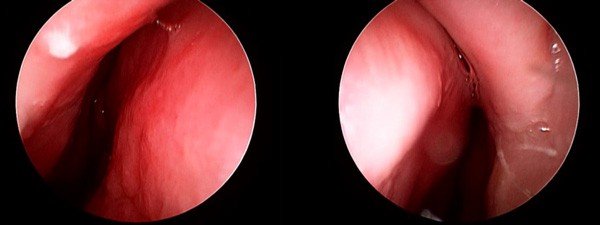
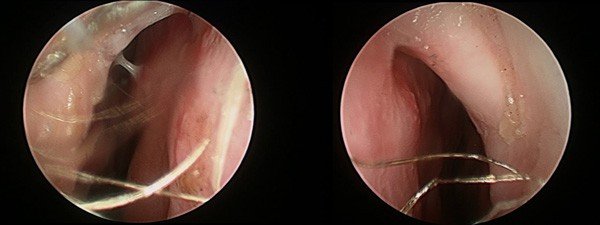
Cysts and tumours can grow in the nose and also obstruct the airflow and make the nasal cavity warm.
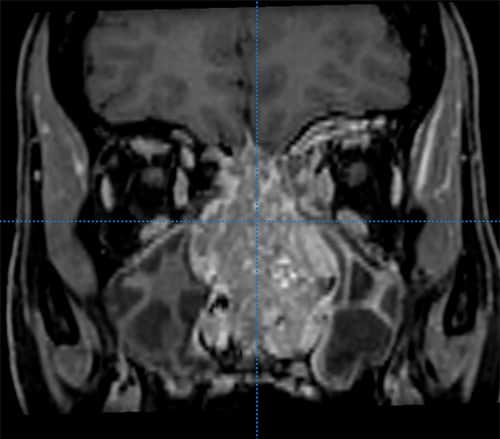
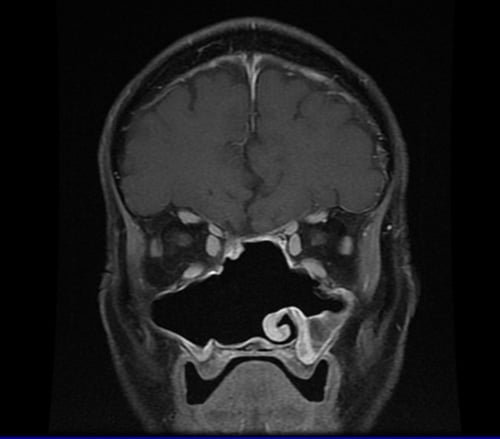
There are also conditions that cause reactivity or inflammation of the nose. This disease is termed rhinitis. Allergy is the most common form of rhinitis and allergic rhinitis or hayfever affects 20-30% of Australia’s population.
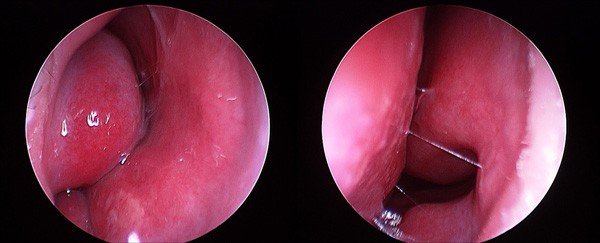
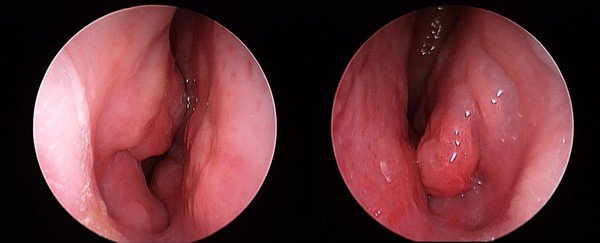
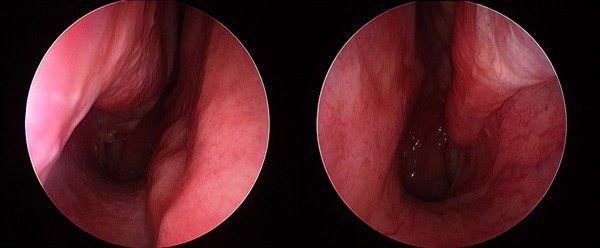
Rhinitis with turbinate hypertrophy (post-surgery)
In rhinitis conditions, although surgery may be applied to help create more space or room for air to flow through the nose, it is rarely used alone. Addressing the underlying allergy and other associated conditions that create nasal inflammation in rhinitis.
Further reading: Nasal congestion
Prof Richard Harvey’s review of nasal congestion for the Journal of Allergy and Clinical Immunology: In Practice (2024) — why patients feel blocked, how the nose senses airflow, and why rhinitis and endoscopy matter as much as the anatomy.
Tested at Kogarah on the day
Allergy testing and objective nasal airway measurement are available in Suite 5 with our allergist and scientists from the group’s nasal airway laboratory, and a sinus CT can be arranged at Lumus or Castlereagh Imaging within a few hundred metres of the clinic.
Frequently asked questions
Why is my nose always blocked on one side?
If it is always the same side, something structural is likely — a deviated septum, a narrowed nasal valve, or occasionally a growth — and that side needs to be examined with an endoscope. If the blockage cycles from one side to the other and back, it is the lining of the nose: the nasal cycle, in which the two sides of the nose take turns swelling and shrinking, is normal, but people with allergy, rhinitis or anything else that irritates the lining feel it far more than most.
Why is my nose more blocked at night or lying down?
Lying flat raises the pressure in the veins of the nose by about 8 mmHg, and the lining swells with it. A normal nose compensates by constricting its blood vessels; a nose that is already inflamed — allergy, rhinitis, enlarged turbinates — cannot, and you feel it the moment your head hits the pillow. Some medicines make this worse by preventing the compensation: blood pressure tablets, the alpha-blockers used for prostate symptoms, and a few others.
How is nasal obstruction measured?
With rhinomanometry — a pressure-and-flow test. It measures how much air flows through each side of the nose against the pressure your breathing generates, and from that curve calculates the nasal airway resistance for each side. It needs to be done in a controlled clinical setting by a respiratory or research scientist who knows how to obtain a reliable result; this is available in our suite at Kogarah through the group’s nasal airway laboratory. The measurement matters because it is very hard, simply by looking in the nose, to tell whether what a patient calls ‘blocked’ is a true restriction of airflow or a sense of congestion from the lining — two different problems with different treatments. Prof Harvey’s review of nasal congestion (above) explains the distinction.
Will nasal sprays fix a blocked nose, and are they safe long-term?
A corticosteroid spray will often unblock a nose when inflammation is the cause, and used correctly it is safe for long-term use. The better question is what you are treating. For a mild seasonal allergy, a regular steroid spray through the season is entirely appropriate. For a persistent, year-round problem — dust mite, or a reaction to something in the home or workplace (chlorine, hair dyes and other occupational exposures are common examples) — the spray is only suppressing the reaction. The solution then is to identify the trigger and remove or avoid it, or, for an allergen you cannot avoid such as dust mite (attempts to remove it from the home are largely unsuccessful in adults), to treat the allergy itself with immunotherapy. A steroid spray can fix the nose temporarily; when the rhinitis is chronic, the question is why it is there and whether something more permanent can be done about it.
What surgery is available for a blocked nose?
Three operations deal with the structure of the nose: straightening the septum (septoplasty), re-supporting and tightening the nasal valve — the narrowest part of the airway, just inside the nostril — and reducing an inferior turbinate that is enlarged or no longer functioning. Which, if any, is right for you depends on first working out whether the nose is truly physically obstructed or whether the feeling is congestion from the lining — and that is why examination with an endoscope and airflow measurement come before any discussion of surgery.
Who treats this at Kogarah



Complex and tertiary sinus and skull base cases: Prof Richard Harvey, Darlinghurst.
For GPs
Send the referral directly to the specialist’s rooms. If the right surgeon isn’t obvious, send it to any of us and we will place it.
Referral information