
Home / Conditions / Nose & sinus
Nose & sinus
Chronic sinus problems (chronic rhinosinusitis)
Contrary to many non-medical beliefs, chronic conditions of the sinus (and airway at large) are rarely infective in nature. Simple bacterial infection rarely causes chronic sinus and lung problems.
Clinical content by the surgeons of Sydney ENT Clinic · Updated October 2026
Chronic inflammation (like we see in psoriasis or dermatitis of the skin) is usually linked to chronic sinus problems and produces the obstruction, mucus, pressure and loss of smell that many patients with chronic sinus disease describe. One of the hallmarks of a chronic ‘inflammatory’ sinus condition is that the inflammation seen on a CT scan is NOT limited to one sinus but spread in a patchy or diffuse pattern across the sinuses.
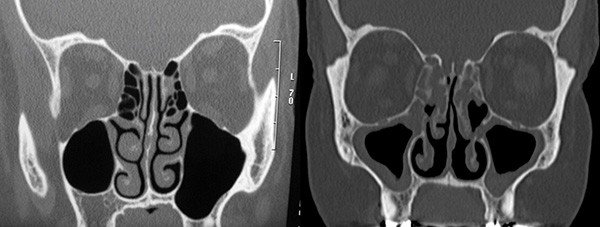
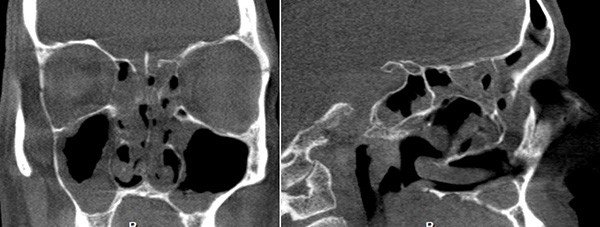
When this chronic inflammation persists, two processes begin; mucus doesn’t clear from the sinuses and bacteria cause a secondary infection which is entirely opportunistic. Secondly, the inflamed mucosa becomes thickened and creates a polypoid like appearance. These ‘nasal polyps’ are not growths like tumours of polyps found in the gut/colon but simply areas of mucosa that have become thickened and chunky with inflammatory cells and fluid.
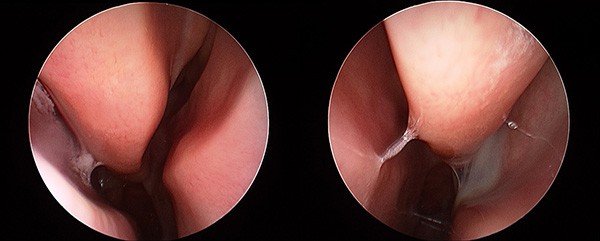
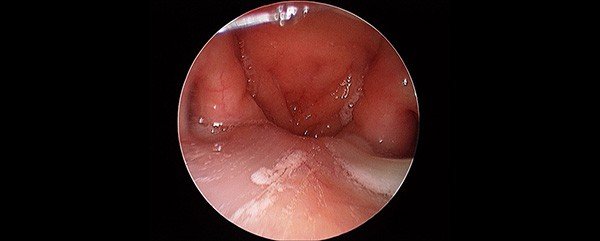
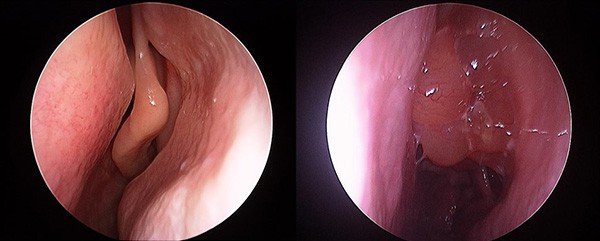
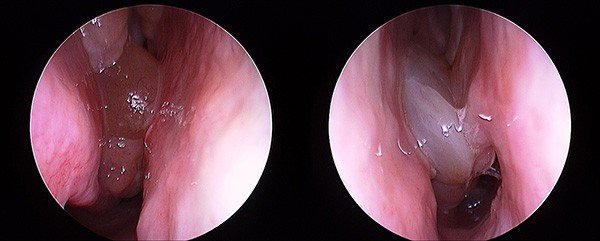
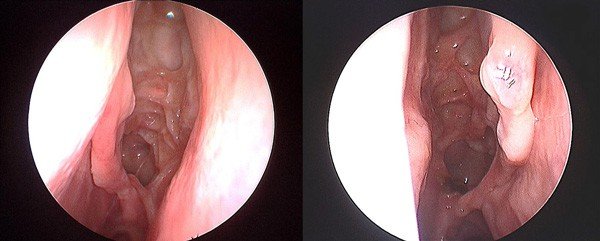
Chronic rhiniosinusits is managed successfully in about 40-50% of patients with medical therapy alone as one-off treatment, about 20-30% of patients are able to suppress their symptoms well with medical therapy alone and can simply take short courses of oral medicine 2-3 times a year to control inflammation or and secondary infections. The remaining 20-30% have very active disease or dysfunctional sinuses and surgery is applied to reshape the sinus cavity from a honeycombe of multiple small interconnected cells into one simple single neo-sinus cavity. This allows for easy washout of mucus with nasal irrigations and delivery of topical therapy to the sinus cavity. All the ‘walls’ to the sinuses and critical structures are preserved but the internal compartments are made into one.
Tested at Kogarah on the day
Allergy testing and objective nasal airway measurement are available in Suite 5 with our allergist and scientists from the group’s nasal airway laboratory, and a sinus CT can be arranged at Lumus or Castlereagh Imaging within a few hundred metres of the clinic.
Frequently asked questions
What is the difference between acute and chronic sinusitis?
They are different conditions, not the same thing at different lengths — the idea that sinusitis simply becomes ‘chronic’ after 12 weeks is not the answer. Acute sinusitis is an inflammatory or infective episode, often one-sided, and it settles. Chronic rhinosinusitis is a group of disorders in which there is persistent inflammation inside the sinuses. It comes in two broad forms. Localised CRS affects one sinus or one side, and usually means something in the local anatomy is stopping that sinus from clearing. Diffuse CRS involves both sides and multiple sinuses; here the anatomy contributes little and the problem is an inflammatory disorder of the airway lining, with the same kind of inflammation seen in asthma.
Do I need a CT scan before seeing an ENT for sinus problems?
Most people with chronic sinus or nasal symptoms will have a CT scan at some point, because it is the only reliable way to tell whether the sinuses are truly involved or whether the symptoms are coming from the nasal passage alone (rhinitis) — endoscopy does not always settle this. The scan can be done before or after the consultation. At our Darlinghurst clinic it is done on site as part of the assessment; at Kogarah it is arranged at one of the radiology practices within a few hundred metres, either before your visit on your GP’s referral or afterwards on a referral from one of our specialists. A CT is also important whenever a complication of sinus disease is suspected.
Does sinus surgery cure chronic sinusitis?
For localised chronic rhinosinusitis, usually yes: when one part of the sinus system is inflamed because of its anatomy, surgery that modifies that anatomy generally gives long-term relief. For diffuse CRS involving both sides, surgery will not cure the condition, because the underlying problem is an inflammatory reaction of the airway, much like asthma, and that continues after the operation. Surgery is still often needed — to remove large polyps, to clear trapped mucus, and above all to open the sinuses so that topical treatment (steroid rinses and sprays) can reach the lining — but it is one part of long-term management rather than a cure.
What are nasal polyps and will they come back after surgery?
Nasal polyps are not tumours like bowel polyps. They are swellings of the sinus lining produced by chronic inflammation and the tissue remodelling that follows it. Unless the underlying inflammation is controlled, they will regrow after surgery — so treatment is directed at the inflammation as much as at the polyps themselves. Significant polyp disease benefits from a specialised, integrated approach: see nasalpolyps.com.au, the group’s dedicated service for people with nasal polyps.
What are the newer biologic (injection) treatments for nasal polyps?
The inflammation that forms polyps can usually be controlled with topical corticosteroid rinses and sprays. When that is not enough, there are now antibody treatments (biologics) that block specific inflammatory signals — the cytokines that drive the reaction. Several are available in Australia for nasal polyps, including dupilumab, mepolizumab and tezepelumab. Our specialists have access to these treatments, and the specialists at nasalpolyps.com.au provide integrated, holistic care for the inflammatory airway conditions that produce polyps.
Who treats this at Kogarah



Complex and tertiary sinus and skull base cases: Prof Richard Harvey, Darlinghurst.
For GPs
Send the referral directly to the specialist’s rooms. If the right surgeon isn’t obvious, send it to any of us and we will place it.
Referral information