
Home / Conditions / Nose & sinus
Nose & sinus
Nasal and sinus tumours
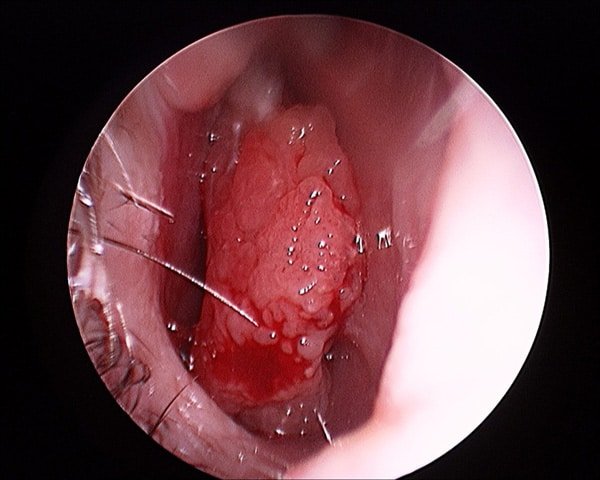
Unexplained bleeding and unilateral (single sided) obstruction is often a concern for a nasal tumour. There are many different tumours that can occur in the nose.
Clinical content by the surgeons of Sydney ENT Clinic · Updated October 2026
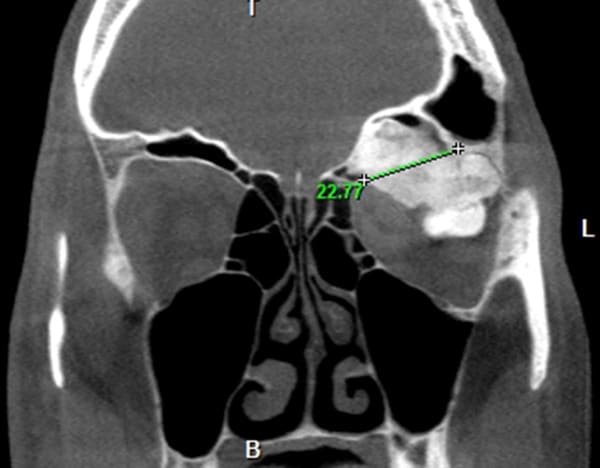
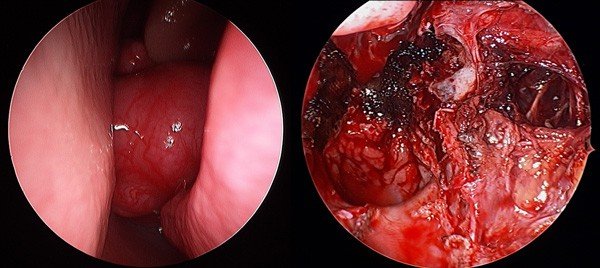
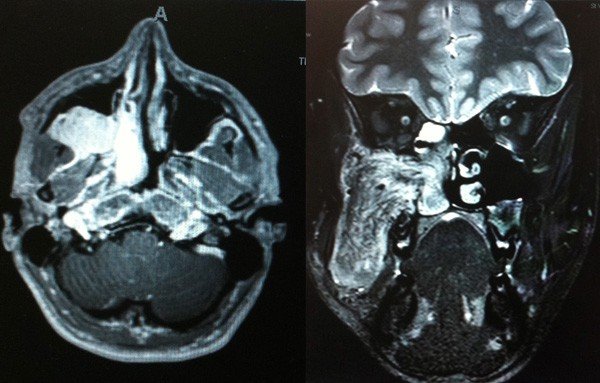
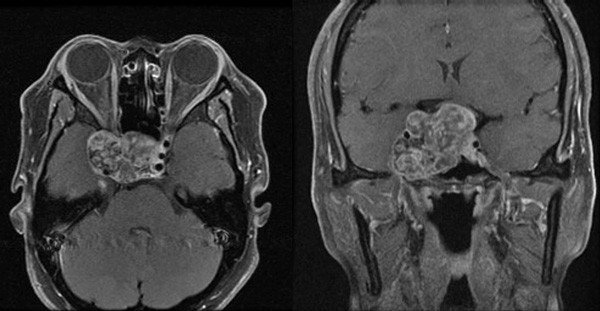
These range from benign tumours arising from the mucosal lining (papillomas), to large vascular (blood vessel) tumours in younger patients to bone tumours (osteoma) through to malignant or cancerous tumours usually in older or adult patients. Sinonasal tumours require special assessment and interventions. Prof Richard Harvey (hyperlink to my website please) will help you through this process if this is required.
Tested at Kogarah on the day
Allergy testing and objective nasal airway measurement are available in Suite 5 with our allergist and scientists from the group’s nasal airway laboratory, and a sinus CT can be arranged at Lumus or Castlereagh Imaging within a few hundred metres of the clinic.
Frequently asked questions
What are the warning signs of a nasal or sinus tumour?
The classic warning signs are all one-sided: blockage of one side of the nose that does not change, bleeding from one side, numbness or pins and needles in the cheek, upper lip or teeth, and eye symptoms on that side — watering, double vision or a change in vision. Any change in the shape of the face, the teeth or palate, or the area around the eye is also a warning sign. None of these proves a tumour, but all of them need the nose examined with an endoscope.
Are most nasal tumours benign or cancerous?
Thankfully, most are benign. Cancers of the nose and sinuses are relatively uncommon, and the same warning signs are far more often caused by a benign growth, a polyp or inflammation — but because the symptoms overlap, every one-sided mass is investigated as though it could be malignant until proven otherwise.
How is a nasal tumour diagnosed?
It starts with a thorough clinical examination and endoscopic assessment of the nose. A biopsy is usually taken, and most of the time this can be done in the clinic under local anaesthetic, which gets the whole diagnostic process moving quickly. For benign tumours a CT scan alone is often sufficient. If the scan cannot fully characterise the tumour, or there is any suspicion of cancer, an MRI is organised as well. A PET-CT and other whole-body assessments are only performed once a cancer has been confirmed.
Can nasal and sinus tumours be removed through the nose?
Many can, and for many types of tumour the endoscopic approach through the nose is now the preferred method, with no external incision. What ultimately decides the approach is not the type of tumour but where it is — how it relates to the eye, the brain and the large nerves and blood vessels around the sinuses. Tumours that extend beyond the reach of the endoscope are treated with combined approaches by the group’s rhinology and skull base surgeons.
Who treats this at Kogarah

Complex and tertiary sinus and skull base cases: Prof Richard Harvey, Darlinghurst.
For GPs
Send the referral directly to the specialist’s rooms. If the right surgeon isn’t obvious, send it to any of us and we will place it.
Referral information